 WeCult App
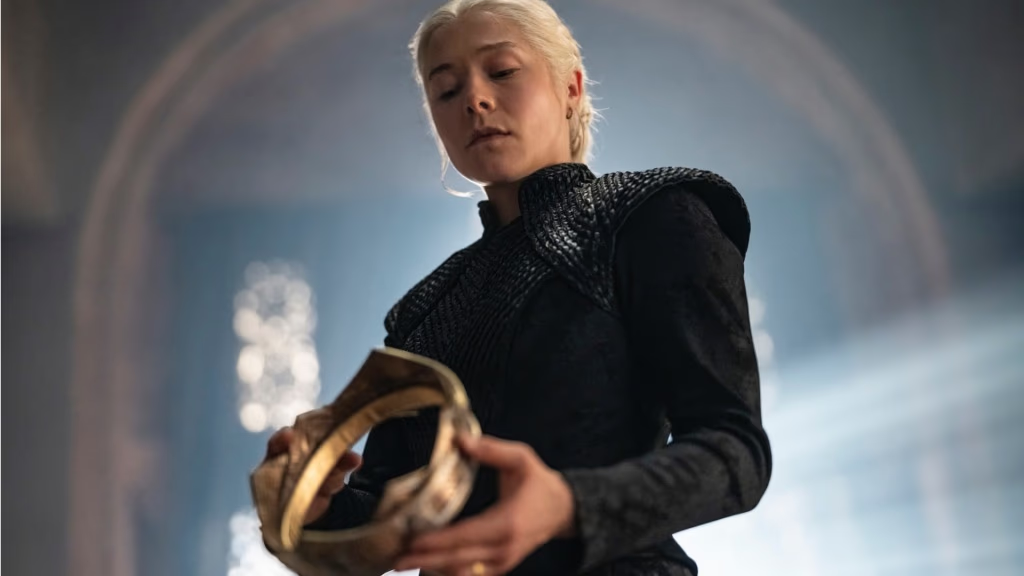
House of the Dragon Is a History Lesson for True Westeros Nerds
While some fans found it slow, House of the Dragon's intricate focus on Westerosi lore is its greatest strength. It's a different kind of Game of Thrones prequel that rewards deep dives into its fictional past.
When A Knight of the Seven Kingdoms premiered, it was lauded for its fresh, lighter tone, a departure from the heavy drama of Game of Thrones. Its shorter episodes and comedic touches made it accessible, a clear signal that it wasn't trying to replicate its predecessor's epic scale. Yet, a fellow Game of Thrones spin-off, House of the Dragon, has been doing something remarkably similar from its inception, embracing a distinct storytelling mode that audiences haven't always fully grasped.
While House of the Dragon has faced criticism for not living up to the legacy of Game of Thrones, the truth is it’s as different from the flagship series as A Knight of the Seven Kingdoms is. The key difference lies in their source material. Game of Thrones was adapted from character-driven high fantasy novels. A Knight of the Seven Kingdoms draws from novellas akin to folktales. House of the Dragon, however, is inspired by George R.R. Martin's Fire & Blood, a tome written as an in-world history book. This makes the series less about immediate character arcs and more about the intricate political machinations and dynastic struggles of the Targaryen rulers, demanding a certain appreciation for historical detail.
The History Nerd's Delight
Think of it this way: Game of Thrones is the Skywalker Saga, A Knight of the Seven Kingdoms is The Mandalorian, and House of the Dragon is Andor. The latter, while critically acclaimed, requires viewers to invest in the granular details of its world-building and political landscape. House of the Dragon gambles that audiences will be willing to delve into the deep, often incestuous, history of the dragonriders who ruled Westeros. It’s a show that rewards those who enjoy the meticulous construction of a fictional past, much like delving into a dense historical text. The Archmaester's perspective, which frames much of Fire & Blood, inherently lends itself to a more academic, chronicle-like presentation rather than a straightforward narrative.
What This Means for Fans
This approach means House of the Dragon isn't always about instant gratification for the casual viewer. Its narrative complexity and focus on the long game of succession and power plays can be daunting. However, for those who are willing to become history nerds of Westeros, it offers an unparalleled depth. The show is essentially a meticulously crafted historical drama set within a fantasy universe, exploring the seeds of conflict that would eventually lead to the events of Game of Thrones. Its success lies in its commitment to this unique, detailed vision, even if it means a slower burn for some.
What's Next
Fans eagerly awaiting more Targaryen drama will have to wait a bit longer. While House of the Dragon Season 3 was initially slated for early 2026, recent reports suggest it may be pushed to summer 2026. This allows ample time for the intricate storytelling and production that defines the series, promising another deep dive into Westeros's tumultuous past.
This prequel's success hinges on its ability to convert casual viewers into lore enthusiasts by meticulously detailing the Targaryen dynasty's complex history, much like a historical documentary.


WeCult App
Track your series — all in one place
Follow releases, track progress, discover what matches your taste. Rate "House of the Dragon Is a History Lesson …" on the app.
Artículos Relacionados

Miedo en el Cape Fear: Bardem revive la terrorífica Max Cady para una nueva generación
La nueva adaptación del Cape Fear de Apple TV+ cambia el protagonista masculino por una perspectiva femenina fresca. Javier Bardem revive a Max Cady con un aterrador nuevo enfoque, sumergiéndose en las fallas sistémicas que alimentan su venganza.
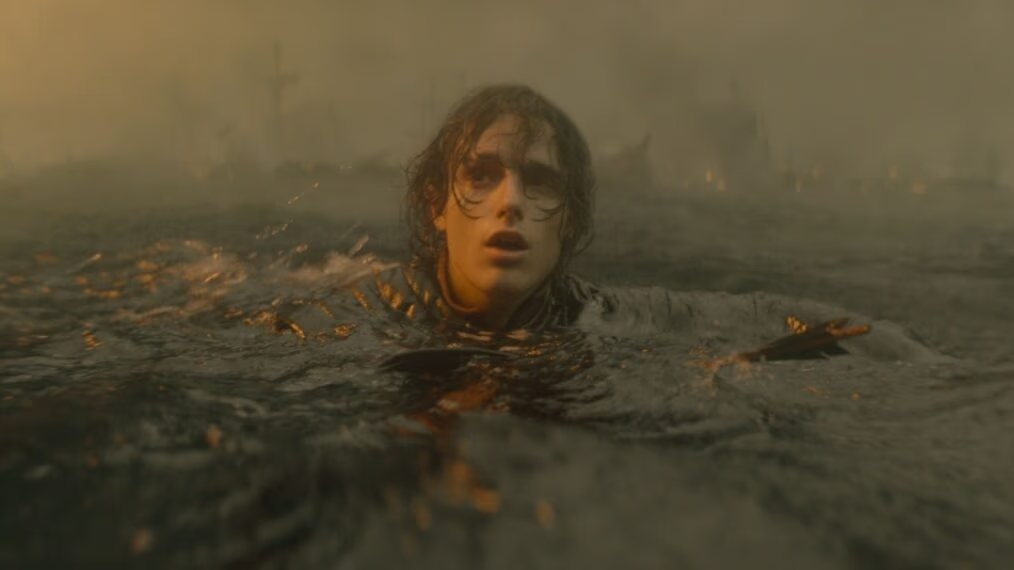
La estrella de House of the Dragon, Harry Collett, reacciona a la muerte impactante de Jace
El actor que dio vida a Jacaerys Velaryon comparte su respuesta emocional a la trágica suerte de su personaje en la última temporada. Los fanáticos todavía se recuperan de la devastadora pérdida. La muerte de Jace ha dejado a la audiencia conmocionada y ansiosa por saber qué sucederá a continuación en la serie.
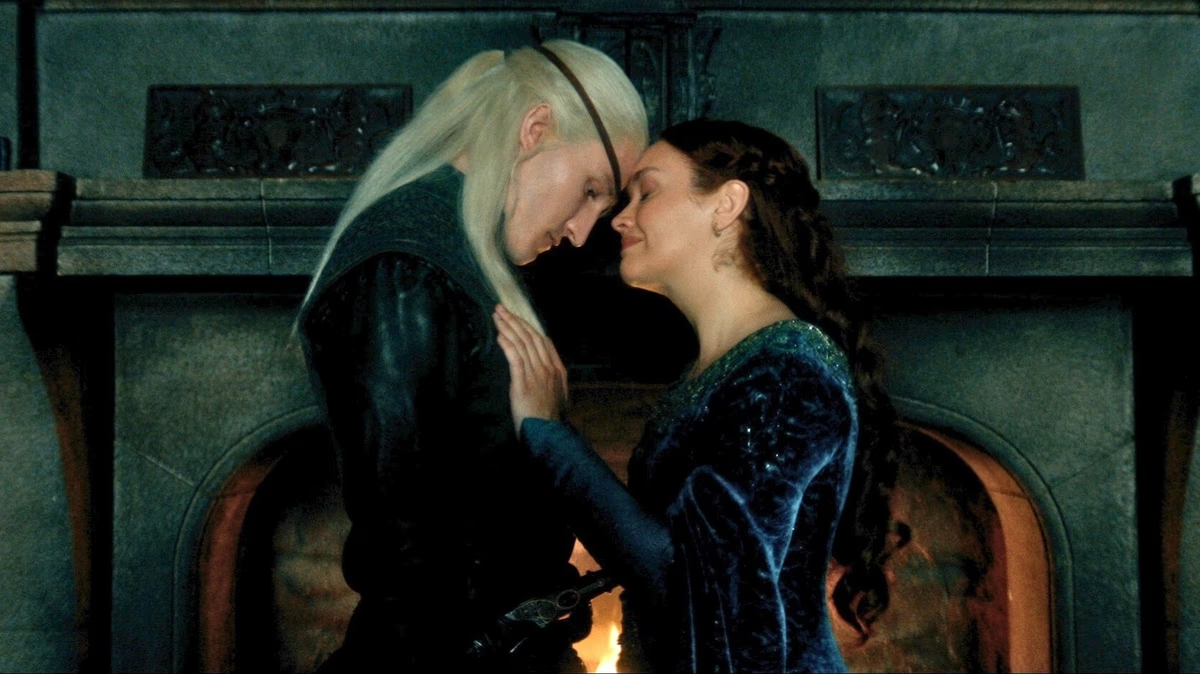
La impactante escena de beso entre Alicent y Aemond en House of the Dragon
Olivia Cooke y Ewan Mitchell, los actores detrás de Alicent y Aemond Targaryen, han hablado sobre el beso inquietante que abrió el último episodio. Sus reacciones sinceras reflejan el shock que sintieron los espectadores en todo el mundo. La escena ha generado un gran debate en la comunidad de fans y ha puesto de relieve la complejidad moral de la familia Targaryen.