 WeCult App

7 Books Where Reality Isn't Quite What It Seems
Explore novels that question the very nature of truth, where experiences are shaped by stories and the line between what happened and what we believe is beautifully blurred.
Piranesi by Susanna Clarke
This novel plunges you into a mysterious, labyrinthine House, inhabited by Piranesi, who meticulously documents its wonders. It masterfully blurs the lines between reality and perception as Piranesi's understanding of his world, and his own identity, slowly unravels, revealing a truth far stranger than he could have imagined.
The City & The City by China Miéville
Imagine two cities, Besźel and Ul Qoma, occupying the same physical space but separated by an unseen, enforced boundary. Miéville crafts a gripping detective story where citizens are trained to 'unsee' the other city, forcing readers to question the very nature of perception and the reality we construct around ourselves.
After Dark by Haruki Murakami
Murakami pulls us into a single night in Tokyo, where disparate characters' lives intersect in dreamlike ways. The novel plays with the fluidity of time and consciousness, making the reader question what is real and what is a fleeting, nocturnal hallucination, much like a half-remembered dream.
Devil Is Fine by John Vercher
This novel explores profound themes of fatherhood, family, and racial identity through a lens that bends reality. It delves into how deeply ingrained stories, both personal and societal, can shape our understanding of ourselves and the events that define us, often in unexpected and unsettling ways.
Ways of Seeing by John Berger
While not a novel, Berger's seminal work on art and visual culture directly tackles the core idea of this list. He argues that "the relation between what we see and what we know is never settled," a concept that underpins how we interpret experiences and why stories so powerfully shape our reality.
Picnic at Hanging Rock by Joan Lindsay
This classic tale of schoolgirls who vanish during a picnic in the Australian Outback is shrouded in ambiguity. Lindsay intentionally leaves the mystery unsolved, forcing readers to grapple with the unsettling possibility that some events defy definitive explanation, existing in a liminal space between fact and folklore.
Voyagers by [Author Name - Placeholder as not provided in source]
This novel, inspired by the author's own fascination with UFOs, centers on two protagonists whose childhood experience of an alleged alien abduction is interpreted differently as they grow. It's a profound exploration of how the stories we construct about events, and the truths we choose to believe, can diverge dramatically, even when rooted in the same shared experience.
Bottom Line: These books remind us that the stories we tell ourselves and others often hold more sway than objective reality.
These novels delve into the unreliable nature of memory and narrative, perfect for readers fascinated by the psychological underpinnings of storytelling.


WeCult App
Track your books — all in one place
Follow releases, track progress, discover what matches your taste. Rate "7 Books Where Reality Isn't Quite What I…" on the app.
Artículos Relacionados
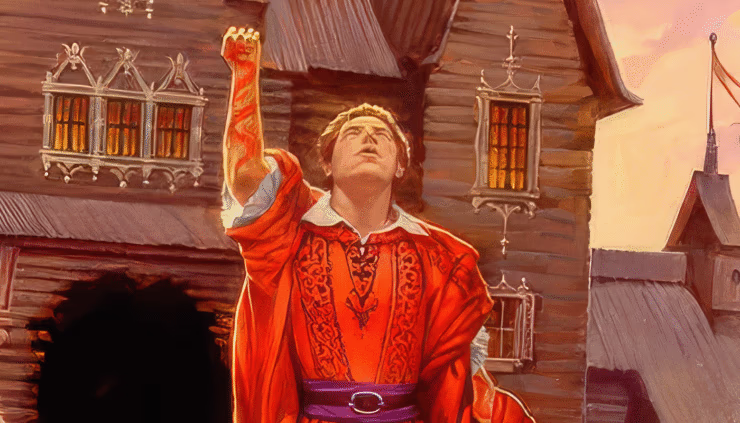
La Crisis de Identidad de Rand al'Thor: Un Eco de Luchas Reales
Un análisis profundo de la fortaleza mental y las luchas de identidad de Rand al'Thor en la serie La Rueda del Tiempo, trazando paralelos con experiencias personales. El autor explora cómo el viaje del Renacido del Dragón refleja la lucha contra los demonios internos. La serie valida los conflictos internos a través del arco de Rand, ofreciendo una poderosa exploración de la resiliencia humana.
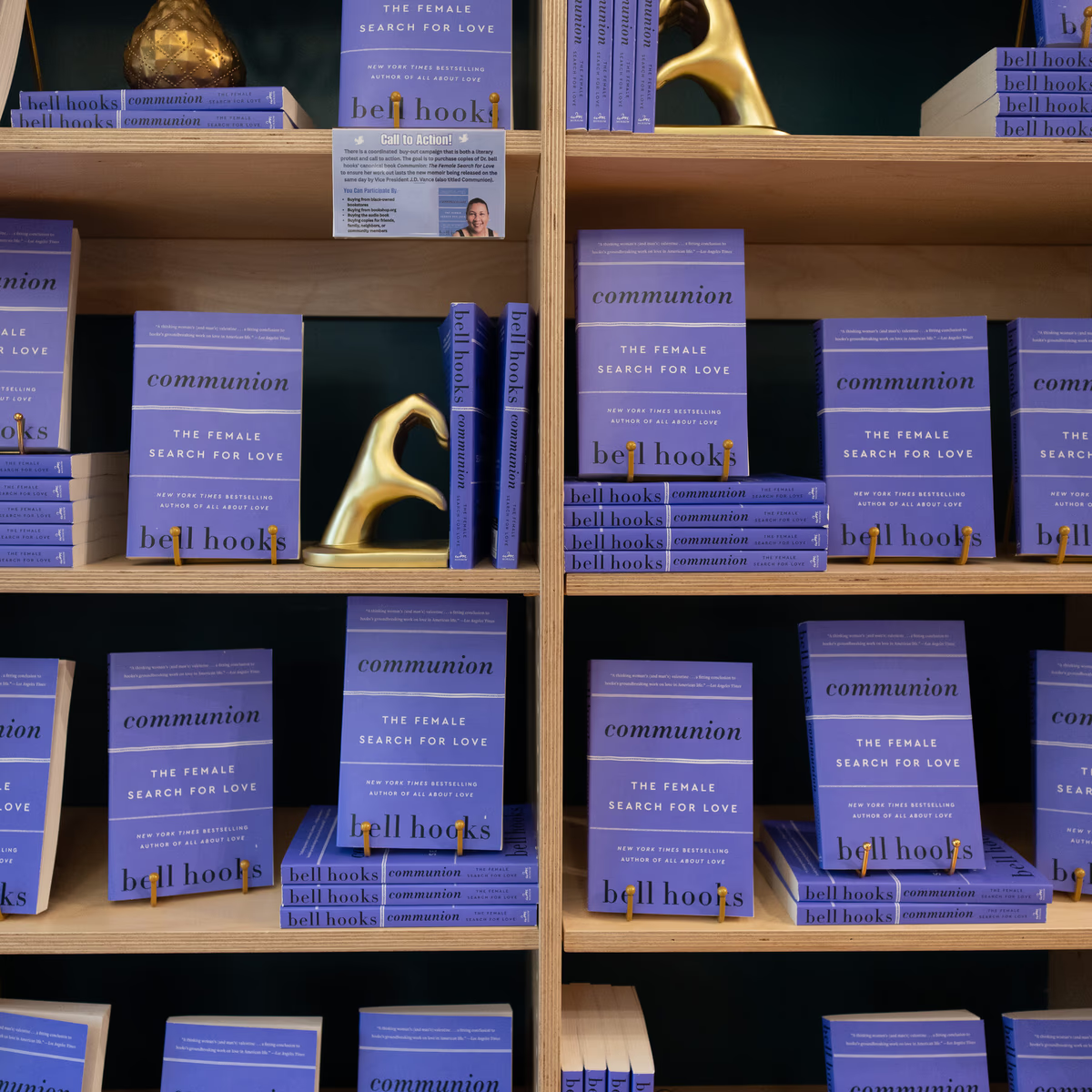
El legado de bell hooks revive gracias a JD Vance
Un movimiento de base ha llevado al libro seminal de la icono feminista negra bell hooks de regreso a las listas de bestsellers. Este resurgimiento fue desencadenado de manera inesperada por el título del último libro de memorias de JD Vance. La comunidad literaria se ha movilizado para reconocer la influencia y el legado de bell hooks en la literatura y el pensamiento social.
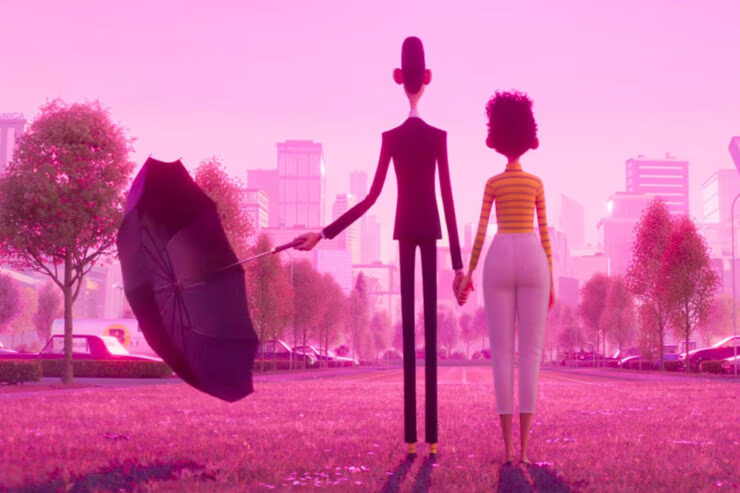
Timothée Chalamet y Selena Gomez se unen para la comedia romántica animada 'Not Alone'
Prepárate para un romance celestial con un toque cósmico. El primer tráiler de 'Not Alone' de Illumination ha llegado, dándonos un vistazo de Timothée Chalamet y Selena Gomez como dos mentes brillantes en una misión. La película promete una aventura llena de corazón y diversión fuera de este mundo.